Interested? Contact us now
In order to contact us please fill the form on the right or directly email us at the address below
sales@senecaesg.comThe European Union (EU) Taxonomy, a landmark classification system for sustainable economic activities, has been making waves in the world of sustainable finance. Designed to set a clear benchmark for what can be considered environmentally sustainable, the taxonomy is poised to become a cornerstone in Europe’s ambitious plan to become the world’s first climate-neutral continent by 2050. But the taxonomy is not just a European initiative; its implications are global. This article will delve into why the EU Taxonomy is seen as a game-changer for sustainable finance and what its broader impact could be.
The Anatomy of the EU Taxonomy
The EU Taxonomy is essentially a system that categorizes economic activities based on their environmental impact. To be included in the taxonomy, an activity must make a substantial contribution to at least one of six environmental objectives, including climate change mitigation and adaptation, sustainable water use, circular economy, pollution prevention, and biodiversity protection. Additionally, the activity must not cause significant harm to any of these objectives and must meet specific technical criteria and thresholds.
The Pros: Setting a Gold Standard
Uniform Criteria
The introduction of a standardized framework offers much-needed clarity in an otherwise fragmented sustainable finance market. Now, both investors and companies have a unified guideline that clearly defines what constitutes sustainable economic activities.
Boost to Green Investments
By offering a clear framework for sustainability, the EU Taxonomy is expected to encourage more investments in green activities. Investors can now confidently channel their funds into truly sustainable initiatives without worrying about ‘greenwashing.’
Regulatory Alignment
With a standardized taxonomy, regulatory bodies can now more effectively draft legislation that aligns with broadly accepted sustainability criteria. This could significantly simplify compliance for businesses and create a more cohesive regulatory landscape.
Global Influence
Though it’s an EU initiative, the taxonomy is anticipated to set a global standard. Its rigorous criteria could serve as a blueprint for other countries or regions looking to establish their own sustainable finance frameworks.
The Cons: Implementation Challenges
Complexity and Scope
The EU Taxonomy is highly detailed, with specific criteria that need to be met for an activity to be classified as sustainable. This complexity could present a steep learning curve for businesses and financial institutions.
Limited Focus
The taxonomy currently places heavy emphasis on environmental aspects, somewhat sidelining social and governance factors. Critics argue that a more holistic approach would provide a fuller picture of sustainability.
Transitional and Enabling Activities
The taxonomy does include provisions for transitional and enabling activities that don’t fully meet the criteria but are essential for the transition to a green economy. However, the inclusion of these categories has been contentious and may dilute the taxonomy’s stringency.
Potential for Regional Bias
While the taxonomy aims to set a global standard, its criteria are tailored to the needs and capabilities of EU member states. This could create difficulties for companies outside the EU, who might find the guidelines less applicable to their local contexts.
Conclusion
The EU Taxonomy is a monumental step in the right direction for sustainable finance, aiming to standardize what has been a highly inconsistent and sometimes misleading market. Despite its complexity and a few limitations, it promises to bring unparalleled transparency and credibility to the sustainable finance ecosystem.
As the taxonomy is adopted and integrated into legal frameworks and business practices, its true potential will unfold. It not only serves the European agenda for sustainability but could very well become the global benchmark for what constitutes genuinely sustainable economic activity.
In a world grappling with existential environmental challenges, the EU Taxonomy could indeed be the game-changer that nudges both businesses and investments toward a greener, more sustainable future.
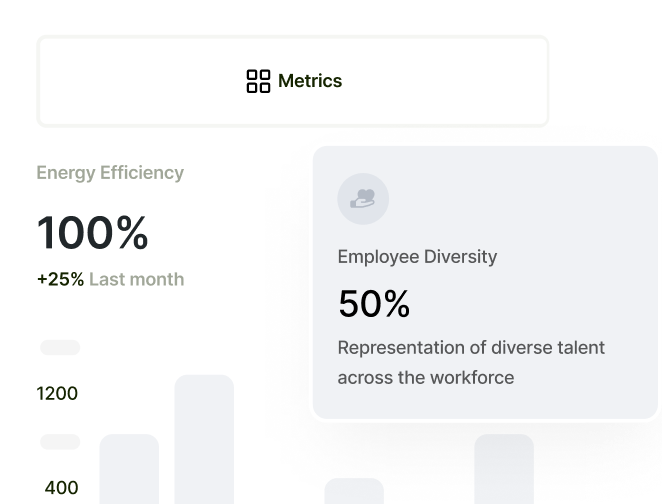
Monitor ESG performance in portfolios, create your own ESG frameworks, and make better informed business decisions.
In order to contact us please fill the form on the right or directly email us at the address below
sales@senecaesg.com7 Straits View, Marina One East Tower, #05-01, Singapore 018936
+(65) 6223 8888
Carrer de la Tapineria, 10
Ciutat Vella, 08002, Barcelona, Spain
+34 612 22 79 06
77 Dunhua South Road, 7F Section 2, Da'an District Taipei City, Taiwan 106414
(+886) 02 2706 2108
Av. Santo Toribio 143,
San Isidro, Lima, Peru, 15073
(+51) 951 722 377