관심 있으신가요? 지금 문의하세요
문의하려면 오른쪽 폼을 작성하시거나 아래 이메일 주소로 연락 주십시오.
sales@senecaesg.com
The Corporate Sustainability Reporting Directive (CSRD) is an ambitious initiative by the European Union (EU) aimed at transforming corporate transparency on sustainability issues. For companies outside the EU, the CSRD carries significant implications, especially for those operating within or maintaining substantial economic ties to the EU. Non-EU companies may find themselves within its scope, requiring them to disclose environmental, social, and governance (ESG) metrics to meet evolving standards on transparency and accountability. This article explores the CSRD’s requirements, how non-EU companies might be impacted, and why proactive compliance can provide competitive advantages.
The Corporate Sustainability Reporting Directive (CSRD), effective in January 2023, builds on the Non-Financial Reporting Directive (NFRD), broadening both its scope and reporting requirements. Its purpose is to create a consistent, transparent framework for sustainability reporting across the EU, making ESG data more reliable and comparable across companies and industries. The directive mandates that businesses report on environmental impacts, social factors, and governance practices according to the newly developed European Sustainability Reporting Standards (ESRS) . Aspects of the CSRD include:
For companies based outside the EU, the CSRD could represent a significant shift in operational and reporting requirements. Non-EU companies are required to comply with the CSRD if they meet any of the following criteria:
For many multinational companies, these conditions mean mandatory compliance with the CSRD, potentially impacting their operations and requiring an overhaul of existing reporting systems. Non-compliance risks include reputational damage, financial penalties, or exclusion from doing business in the EU, where sustainability expectations are increasingly rigorous.
Understanding these implications is crucial for non-EU companies to effectively adapt their strategies and align with the EU’s stringent sustainability standards.
Under the CSRD, non-EU companies meeting the above criteria must report on double materiality, meaning they need to disclose both:
This expanded requirement will likely require non-EU companies to collect and analyze extensive data on carbon emissions, energy usage, waste management, and social practices such as labor standards and community engagement. Companies unaccustomed to detailed ESG reporting may need to establish or upgrade systems to meet these requirements.
Preparing for CSRD compliance will likely involve significant upfront investments, particularly for companies unfamiliar with EU-style ESG reporting. Potential costs include:
While these costs are tangible, they may also yield long-term benefits, as better reporting often leads to enhanced operational insights and reputational gains.
Failure to meet CSRD reporting requirements may expose companies to penalties and other regulatory actions within the EU. Additionally, non-compliance can result in reputational damage, affecting relationships with investors, consumers, and other stakeholders who prioritize sustainability. As such, for companies operating within the EU, the CSRD is both a compliance necessity and a strategic consideration for maintaining market access.
To navigate these challenges effectively, non-EU companies must adopt a proactive approach in understanding and integrating the CSRD requirements into their existing frameworks:
Although adapting to the CSRD requires investment, compliance offers substantial benefits:
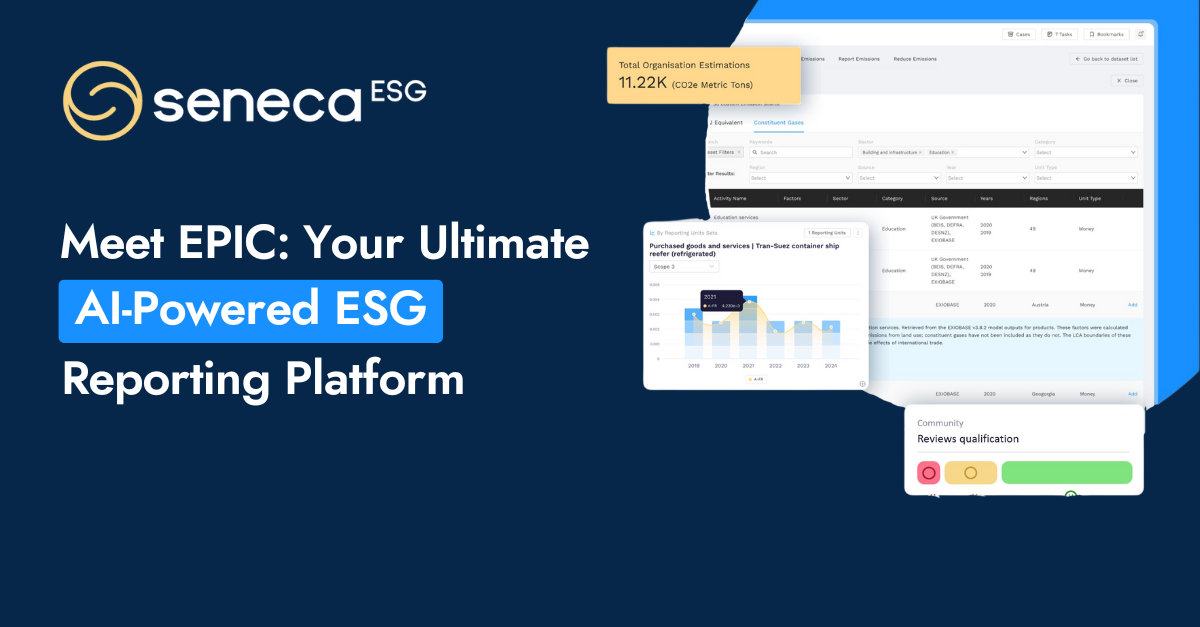
For companies navigating the complexities of the CSRD, Seneca ESG’s EPIC platform offers a powerful, centralized solution for managing Environmental, Social, and Governance (ESG) data and achieving compliance.
Key Features of the EPIC Platform:
For companies outside the EU, the CSRD is more than just a regulatory shift; it’s a move toward a new era of corporate transparency and accountability. Non-EU companies with ties to the European market should proactively assess their eligibility and begin preparing to meet the directive’s requirements. Through early alignment with the CSRD, companies can not only avoid potential compliance challenges but also position themselves as leaders in the global push for sustainability.
References:
포트폴리오의 ESG 성과를 모니터링하고, 나만의 ESG 프레임워크를 만들며, 더 나은 비즈니스 의사결정을 내리세요.
문의하려면 오른쪽 폼을 작성하시거나 아래 이메일 주소로 연락 주십시오.
sales@senecaesg.com7 Straits View, Marina One East Tower, #05-01, Singapore 018936
+(65) 6223 8888
Carrer de la Tapineria, 10
Ciutat Vella, 08002, Barcelona, Spain
+34 612 22 79 06
77 Dunhua South Road, 7F Section 2, Da'an District Taipei City, Taiwan 106414
(+886) 02 2706 2108
Av. Santo Toribio 143,
San Isidro, Lima, Peru, 15073
(+51) 951 722 377